Which Freelancing Skills Pay, Start Fast, and Fit Your Background?
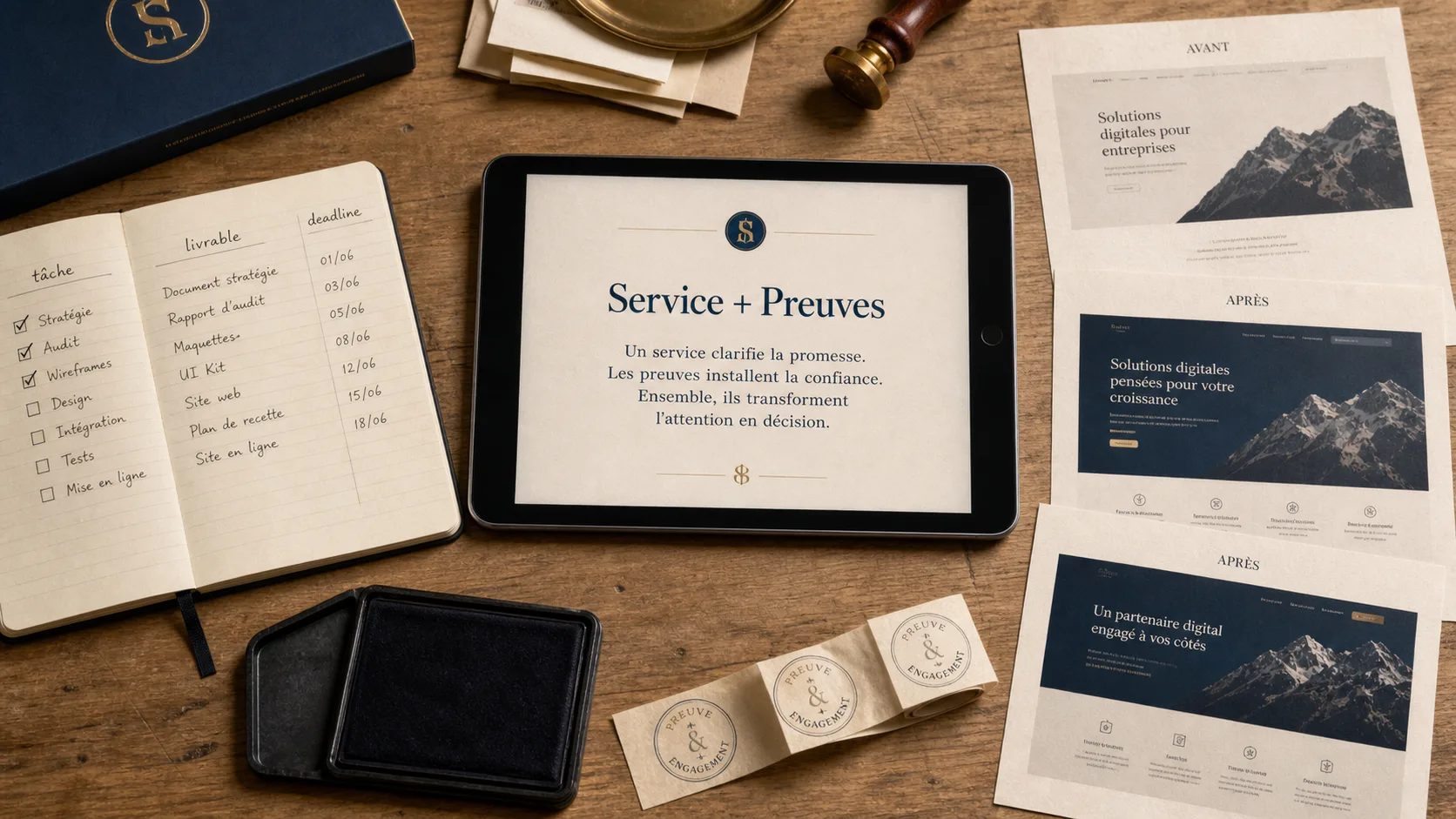
Choosing the right freelancing skills is not about finding the most impressive talent online. It is about finding a skill someone already pays for, packaging it clearly, and proving you can deliver without asking the client to take a big risk. If you feel lost, start there: a freelance skill only matters when it becomes a service with a buyer, a result, and a simple way to judge quality.
Freelancing means selling your work to one or more clients without a full-time employment contract. That work can be remote, local, creative, technical, administrative, language-based, or hands-on. You do not always need a degree, certification, or years of experience, but you do need proof: samples, before-and-after examples, testimonials, a trial project, or a clear process.
What makes a skill freelance-ready?
A skill becomes freelance-ready when it solves a defined problem for a specific type of client. “I write” is broad. “I write weekly email newsletters for coaches who already have a small audience” is easier to sell. “I speak Spanish and English” is useful, but “I localize landing pages and ad copy for brands entering Spanish-speaking markets” is a service, not just a skill.
Quiz : Maîtriser le Freelancing
Skill, service, and outcome are not the same thing
The skill is what you can do. The service is how you sell it. The outcome is why the client cares. For example, translation is the skill; translating product pages, ads, and keywords into another language is the service; helping a business run a campaign in another country is the outcome. That distinction matters because clients rarely search for raw talent. They search for someone who can remove a bottleneck.
A strong freelance service usually has four parts: the task, the buyer, the deliverable, and the deadline. Instead of offering “social media management,” you might offer “12 LinkedIn posts per month for B2B consultants, delivered with captions and content angles.” That gives the client something concrete to evaluate and makes your offer easier to compare with others.
Check your offer from the bottom up
Think of your freelance offer like a column holding up a small roof. If one block is missing, the structure wobbles. The base is your ability, can you actually do the work? The next layer is evidence, can a stranger see proof? Above that is positioning, who exactly is it for? The top layer is delivery, can you complete it reliably, communicate clearly, and handle revisions? Many beginners focus only on the visible top, such as a profile on Upwork or Fiverr, but the hidden support layers decide whether a client trusts you. Before chasing more skills, strengthen the column you already have.
Beginner-friendly freelancing skills you can package quickly
The easiest skills to start with are not always the highest-paying skills. They are the ones with low entry barriers, visible deliverables, and enough demand for small starter projects. Writing, translation, localization, social media support, simple advertising help, and home maintenance all fit different profiles.
| Skill area | Best fit | Entry barrier | Monetization speed |
|---|---|---|---|
| Content writing | Clear communicators, researchers, niche hobbyists | Low to medium | Moderate if you show samples |
| Translation and localization | Bilingual or multilingual people | Medium | Fast when paired with business use cases |
| Social media management | Organized people who understand platforms and tone | Low | Fast for small local or creator clients |
| Digital advertising support | Analytical beginners willing to learn campaign basics | Medium | Moderate, faster with a narrow niche |
| Ghostwriting and scriptwriting | Writers who can match voice and structure ideas | Medium | Moderate to strong with strong samples |
| Handyman and home repairs | Practical, local, hands-on workers | Varies by location and legality | Often fast if demand exists locally |
Writing, ghostwriting, and scriptwriting
Writing is a common beginner path because clients can judge samples quickly. You can start with blog posts, newsletters, product descriptions, short scripts, video outlines, grant writing support, or ghostwritten thought-leadership posts. The key is not to present yourself as a general writer for everyone. Pick a format and a client type: podcast scripts for coaches, grant drafts for small nonprofits, or website copy for local service businesses.
Ghostwriting and scriptwriting require more sensitivity than basic content writing because you are often shaping someone else’s voice. A simple way to prove skill is to create three sample pieces in different tones: educational, persuasive, and conversational. That shows range without pretending to have a long client list, and it gives prospects a quick read on how flexible your writing can be.
Language skills, translation, and UX localization
Language ability becomes more profitable when it moves beyond word-for-word translation. Businesses need copy, keywords, product interfaces, and user flows adapted for another culture. That is where localization becomes valuable. A bilingual freelancer can help convert ad copy and search terms into another language, but also flag phrases that sound unnatural, unclear, or culturally off.
UX localization is especially useful for international digital products. It connects language, user experience, and business context: buttons, error messages, onboarding screens, pricing pages, and help articles all need to feel native. If you have cross-cultural experience, this can be more distinctive than offering generic translation, because it addresses the way people actually use the product.
Hands-on services and local freelance work
Not every freelance career happens behind a laptop. Handyman work, home maintenance, small repairs, drywall, flooring, decks, landscaping, and simple renovation projects can all be freelance services when there is local demand. This path is attractive because clients often need immediate help and can judge results visibly.
However, this category requires caution. Legal and licensing rules may apply depending on the location and the type of work. Some tasks are simple maintenance; others may require permits, insurance, or a licensed trade professional. Before offering paid work, check local rules and avoid projects beyond your legal scope or ability.
Which skills are in demand and likely to pay?
Demand comes from repeated business pain: companies need content, customers, communication, repairs, administrative relief, and international reach. That is why digital advertising, writing, translation, localization, social media management, and home services appear again and again in freelance discussions. They solve recurring problems, and recurring problems are easier to sell.
Freelancing is also no longer a fringe career model. Commonly cited market figures mention more than 18 million freelancers, 47% of workers worldwide freelancing, and 78% of companies employing freelancers remotely. These numbers do not mean every skill will pay immediately, but they do show why businesses are comfortable buying work from independent professionals.
High demand does not always mean beginner-friendly
Digital advertising can pay well because it is close to revenue, but clients expect care: budgets, targeting, copy, keywords, and reporting all matter. A beginner can still enter by offering a narrow support service, such as rewriting ad copy, organizing keyword lists, translating campaign assets, or building simple performance reports.
Similarly, grant writing may be valuable, but it requires accuracy, deadlines, and familiarity with funder expectations. If you are new, begin with research, editing, document organization, or assisting an experienced grant writer before selling full applications. That gives you a way to learn the workflow without promising more than you can deliver.
Fast proof usually wins early clients
When you have no reputation, choose a skill where proof is easy to show. Writers can publish samples. Translators can show side-by-side excerpts. Social media freelancers can create mock content calendars. Handyman freelancers can use before-and-after photos, provided they have permission. Advertising freelancers can show campaign structure, copy variations, and reporting templates without claiming results they did not generate.
Clients do not need your entire life story. They need to know whether you understand their problem, whether your sample looks competent, and whether hiring you feels low-risk. That is often enough to move a first conversation forward.
How to choose the right freelance skill for your background
The right skill depends on your existing assets: language ability, professional experience, hobbies, tools you already know, local demand, and the type of work you can tolerate repeatedly. A profitable path you hate doing every week is not a good path.
- If you are bilingual: explore translation, localization, multilingual customer content, ad copy adaptation, and international UX reviews.
- If you write clearly: try content writing, ghostwriting, scriptwriting, newsletters, grant support, or website copy.
- If you are organized: package social media scheduling, inbox support, research, content calendars, or project coordination.
- If you are analytical: consider digital advertising support, keyword research, reporting, or campaign localization.
- If you prefer physical work: look at home repairs, maintenance, and simple renovation services, while checking local legal requirements.
- If you have job experience: convert one repeatable task from your role into a service, such as compliance document cleanup, healthcare admin support, operations templates, or client onboarding materials.
A useful rule is to avoid choosing only by income potential. Compare each option by three filters: can you learn it to a sellable level, can you prove it quickly, and do clients already pay for it? The best beginner choice sits where those three overlap, because it reduces guesswork and shortens the path to your first paid work.
How to start freelancing with little or no experience
You can start without previous clients, but you should not start without proof. Your first goal is not to look like a top 1% freelancer on Upwork. Your first goal is to look trustworthy enough for a small, clear project.
- Pick one service: avoid listing ten unrelated skills. Start with one offer for one type of client.
- Create three proof pieces: samples, mock projects, before-and-after edits, content calendars, translated excerpts, or repair photos.
- Write a simple profile: state who you help, what you deliver, and what the client receives.
- Use starting platforms wisely: Upwork and Fiverr can help beginners learn what clients ask for, but your offer must be specific to stand out.
- Pitch low-risk projects: propose audits, small batches, one-page edits, one-room repairs, or short trial deliverables.
- Collect feedback: testimonials, repeat work, and referrals are often more useful than a certificate at the beginning.
Courses, trainings, Q&A calls, coworking groups, and tools libraries can shorten the learning curve, especially if they help you build deliverables instead of only consuming lessons. Certifications can help in some fields, but they are not a substitute for work samples. For many beginner-friendly services, practical proof is more persuasive than a badge.
Finally, respect the limits of your offer. Do not sell expert strategy if you can only provide execution. Do not accept legal, technical, or trade work that requires licensing you do not have. Freelancing rewards initiative, but it also rewards clarity. The safest starting point is a narrow promise you can fulfill well, repeat, improve, and eventually price higher.